Monday, November 20, 2006

The Model Father

I recently read about Rick Hoyt, a man who has been severely disabled from birth. During birth, the umbilical cord wrapped around his neck and strangled him, leaving him severely brain damaged. He is unable to talk, walk, or use his hands. Doctors told his parents that he would never be anything more than a vegetable and that they should just put him in an institution.

Rick's father, Dick Hoyt, was unwilling to accept this. He could see in his son's bright eyes that he was not a vegetable. After taking him to the engineering department at Tufts University and fitting him with a computer that he can use to communicate by tapping a button with the side of his head, they began to communicate in a way they hadn't before. This enabled Rick to do so much more. Not only did Rick graduate High School, he also went on to college and got a degree in special education.

When a classmate was injured and the school organized a charity run for him, Rick typed out to his dad, "Dad, I want to do that."

Dad was not an athlete and not in shape, but he did it anyway. When they started the five mile race, many of the people watching thought that Dick would push his son down to the corner and come back. But he didn't. He ran the entire five miles. Afterward, Rick typed out, "Dad, when we were running, it feels like I'm not even handicapped!"

So began the first of many races, which not only included marathons, but triathlons as well. Some have told Dick that he ought to try racing on his own without Rick, since he does well even towing his disabled son around. But Dick never does. Dick makes it clear that the motivation for his running is for his son Rick to be able to live a normal life. Rick cannot race without his Dad, Dick, and Dick will not race without his son, Rick. They are called "Team Hoyt." Rick's father has become his arms and his legs in the race.

Here are a couple of videos that chronicle the highlights of this amazing journey.

(Note: You will need Flash Player to play these videos. Click here to download it)

Part 1 (click arrow twice to start video)


Part 2 (click arrow twice to start video)


After watching these videos, I was stuck by a father's love for his son. Dick gave up so much for his son, but never does he ever regret it. Rick can do none of this without his father, so his father has become his arms, his legs, his strength. Dick outputs and amazing amount of time, effort, and energy for his son. They do everything together. What an amazing father!

It occurs to me that this is sort of the way it is with my Heavenly Father. My sins, which twisted my life, rendered me a powerless and slave to them. He took those sins and bore them upon himself. He bore them out of love for me. I can do nothing without my Father. Without him, I would still be enslaved. It is my Father who is at work in me both to "will and to work for His good pleasure" (Phil 2:13). Truly, I can do nothing without him. I can neither will nor work to please Him.

I am still weak, but his power is demonstrated in my weakness. He carries me through life with his strength. When I sin, I remind myself that I can do no better without Him, and that I need to reconnect with Him. I cannot do it on my own. Without him, I would be stuck right where I was. The strength that I now have is really not my own. His power is demonstrated in my weakness. He gave and continues to give to me endlessly.

What a challenge this is for me! God is the model Father, and I want to be a Father like Him. As a Father like God, I need to model selfless, sacrificial love that seeks the good of others before myself. If God is the model Father for me and I try to model myself after him, perhaps my kids will get a small, imperfect glimpse of God in me. Godliness. What a rich word, full of love.

Sunday, November 19, 2006

How I Use God's Time


"There is an appointed time for everything. And there is a time for every event under heaven--A time to give birth and a time to die; A time to plant and a time to uproot what is planted. A time to kill and a time to heal; A time to tear down and a time to build up. A time to weep and a time to laugh; A time to mourn and a time to dance … (Eccl 3:1-4)."

And on and it goes. I used to think that this was a passage that reminds us merely that there are various season of life that come and go. However, when I read the passage in context, I see something different. At the conclusion of this section, the preacher asks, "What profit is there to the worker from that in which he toils?" (Eccl 3:9). This is not a rhetorical question. The overall tone in the book of Ecclesiastes is ironic. The author seems to highlight the limits of traditional wisdom and the general meaninglessness of much of what humans do. The opening of the book portrays the endless cycle of life that goes on and on and on in weariness (Eccl 1:3-9). There is a circular view of time with little meaning to it. Sure, there is a time for everything. So what?

There is meaning to time, and it will not be found "under the sun." It is found it the God whom we were created to honor, serve and love. Time only has meaning in him. The time that my God has allotted to me needs to be ordered according to him. That is what a passage in Ephesians reminds me of.

"Therefore be careful how you walk, not as unwise men but as wise, making the most of your time, because the days are evil. So then do not be foolish, but understand what the will of the Lord is (Eph 5:15-17)."

Making the most of" your time literally is "redeeming" the time. I looked up the Greek word used in this passage, "exargazo," and it means to "redeem, deliver, or purchase the freedom of." This tells me that my time can be held captive. Dominant forces in my life can take my time hostage. Therefore, I need to "redeem" it, or "deliver" it from captivity according to "what the will of the Lord is."

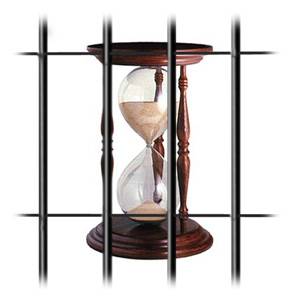
As I reflect on this, it occurs to me that we all have been given 1,440 minutes every day. We all use the time that has been allotted to us. We really have no choice but to use it. But to what end do we use it for?

There are many demands placed on my time. By what criteria do I determine how I allocate it? If I do not give this any prior thought, then my time will probably be hijacked by every perceived emergency or desire of the dominant people in my life. Whether it is a neighbor, friend, boss, or something else, my time may be up for grabs to whoever is the most dominant, demanding or loudest. It may be a boss, a demanding friend, a task, or something else.

Unordered time leads to a disorganized life. Gordon MacDonald shares some traits of a disorganized life, which are indications of unordered time. Some of these hit close to home, such as clutter in my life, including on my desk, in my car, on my dresser, etc. I still remember Joe Jones, one of my teachers at Harding University, who use to say, "If you have to spend more than 10 minutes looking for something, you are not a good steward of your time." Another symptom is the difficulty of enjoying intimate relationships with others, including God. God usually doesn't shout when I neglect my spiritual disciplines. My family understands when I am too busy to go to a ball game or participate in a family activity. There are other forces in my life, which can be more demanding a less understanding. However, I recognize that those forces are often not the most important thing in life and can wait.

Time is the most valuable resource God has given me. Like my bank account, I need to budget my time according to what is truly important. It has to begin with prayer and it needs to be honest. Stephen Covey has some useful time management tools that can be found easily online. I like table below. Every task and demand of my time will fall in one of the four quadrants, and each quadrant has instruction on how to handle it. It is beneficial to spend some time with this reflecting on your use of time.


Urgent

Not Urgent
Important

1 - DO NOW - Subject to confirming the importance and the urgency of these tasks, do these tasks now. Prioritize according to their relative urgency.

2 - PLAN TO DO - Critical to success: planning, deciding direction and aims, etc. Plan time-slots and personal space for these tasks.
NotImportant
Not Important

3 - REJECT AND EXPLAIN - Scrutinize and probe demands. Help originators to re-assess. Wherever possible reject and avoid these tasks sensitively and immediately.

4 - RESIST AND CEASE - Habitual 'comforters' not true tasks. Non-productive, de-motivational. Minimize or cease altogether. Plan to avoid them.

It occurs to me that for this tool to be even more effective, I need to have some clear cut criteria as to which activity goes into which quadrant. Nearly every successful organization has a mission statement of some sort. It guides how they appropriate, order, and use their resources. What about a personal mission statement? Can I articulate what my God-given mission in life is? If not, I may have a little trouble deciding which activity or task goes into which quadrant.

Here are some steps that seem to be a logical way of going about it.

1) Have a clear sense of mission. I need to have a clear sense of God's mission. My mission should be to love God and love my neighbor. Any particulars of how I carry out that mission needs to flow from this.

2) Identify the Non-negotiable parts of my time. These are things that come first that I do not sacrifice for something else. Things such as my alone time with God, my family time, etc., these are non-negotiable and come first.

3) Budget and prioritize. Ibudget other resources in my life, such as money. Time is something that I need to budget. The chart above is a good tool for this. I need to place the current demands of my time, and any demands that come up in one of the four quadrants and follow the suggested instructions there.

I pray that I can become a better steward of the time that God has allotted to me.

Tuesday, November 14, 2006

God's Common People

Having completed a Revival Meeting in my home town of Plattsmouth, Nebraska has caused quite a bit of reflection. It had been nearly fourteen years since I had been in Plattsmouth and preached a sermon. It was there in that little congregation that I first cut my ministry teeth. I preached my first sermon as a teen there. I remember the bus program for which the church was known for around town. I remember the active Youth Group of some 21 teens. I remember the skit group that existed, the Eye Openers. I remember some of the full time preachers in the years I was there such as Clay Ross, Chris Thurber, and Paul Stidham. I remember worship attendance of 120 people. I remember the Youth Rallies, Area Wide Men's Fellowships, Area Singings, and Gospel Meetings we hosted. I remember the regular visitation, the Jule Miller Filmstrip Studies, and the outreach and evangelism that was a part of the congregation. I remember the church growing to the point it undertook a building program to accomodate the growth. I remember the air of excitement and joy I felt. I remember that at one point a majority of the people on Tammy Lane were Christians.

I felt a surge of excitement go through the congregation again. It doesn't matter that there are now less than twenty people in the congregation. God has demonstrated time after time that our size, ability, appeal, etc. doesn't matter. What matters is that we ordinary people believe in an extraordinary God. If God can call an 80 year old man to lead an entire nation out of bondage, then he can lead a common person like me to lead my freind to Christ.

During our revival, I was challenged and encouraged as I watched a small group of us go out into the neighborhood with the Gospel. I watched a young woman who was enthused about serving God go out on our first day and speak to a man about the Gospel. The man agreed to a Bible study. The weather didn't cooperate the next day, so we didn't do a whole lot. On day three, another study took place. We usually had only one team out, and a couple of times we had two. In what amounted to only two and a half days because of the weather, we managed to knock on 86 doors, found 34 at home, and had two Bible studies.

Since there were no baptisms, someone might wonder why I was so happy about that. In 1 Corinthians 3-4, it is clear that we are servants who plant and water, and God caused the increase. In other words, results are not my job. My job is to be faithful. The rest is up to God. I am sure that after we left those two studies, that the Holy Spirit worked on the hearts of those who heard. Essentially God has now placed the ball in their court. We were carrying out God's desire, and we can do no more.

This young woman from Plattsmouth is on fire for God. I learned that she has some health issues which would slow her down. I couldn't tell because she was so passionate about what was happening. I very much enjoyed working alongside her and the other members of the congregation. She is a reminder that when it comes to serving God, there are no excuses. It is not about my abilities or my limitations, about about God and what he can do. All God requires is faithfulness, trust, and commitment. In 2 Cor 12:7f, we are reminded that power is perfected in weakness. If I am limited, if I had shortcomings, quirks, lack of talent, etc. then this is great. God can display his power in me even more.