

This is a pattern that is not limited to kids on the field. In the adult world, those who are most able, devoted, and popular are usually chosen first. In contrast, the Bible tells us that this is not how God operates.
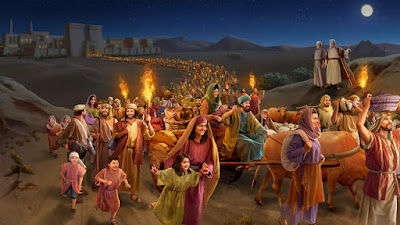
After the defeat of Pharaoh, the crossing of the sea, and the trip in the wilderness, the people got tired of the leadership of those whom God had chosen, namely Moses and Aaron.
“Now Korah the son of Izhar, son of Kohath, son of Levi, and Dathan and Abiram the sons of Eliab, and On the son of Peleth, sons of Reuben, took men. And they rose up before Moses, with a number of the people of Israel, 250 chiefs of the congregation, chosen from the assembly, well-known men. They assembled themselves together against Moses and against Aaron” (Num 16:1-3).
They then accused Moses and Aaron of taking them away from Egypt (seemingly forgetting that they were abused slaves there) and of appointing themselves as prince over the people. Humble Moses’ first response to their rebellion was to fall flat on his face. Moses was acutely aware of the presence of Yahweh and knew the danger they were in due to their rebellion.
God’s response was to open the ground up to swallow up the rebels along with all they had. God then reaffirmed his choice of Aaron as high priest by having his staff miraculously grow ripe almonds overnight. As a reminder to future generations, God instructed them to put Aaron’s rod in the Tabernacle.
What a contrast between the rebels who were “chosen” by the people and Moses and Aaron, who were chosen by God. The text says that the people’s choice were “well-known men.” I can imagine that they were popular, dynamic, perhaps good-looking, and had all of the desirable human characteristics. The single biggest problem is that they were not God’s choice.
God does not choose on the basis of skill, ability, age, looks, or any of thing things we would place as of first importance. God chose the younger brother Jacob instead of Esau. God chose young Joseph to save his brothers in Egypt. God chose the aged Moses to lead his people. God chose the young shepherd boy, David to be King over all his older brothers. God chose Jeremiah who was a youth and did not know how to speak well. God chose Israel, the least of the nations, because of the oath he swore to their ancestors, Abraham, Isaac, and Jacob (Dt 7:6-8).
God often chooses the least of these. God did not choose a prominent family in Jerusalem to be the parents of the Messiah, but chose Joseph and Mary in far away Nazareth. Jesus did not choose students from the most the rich or prominent students from the leading rabbinical schools. Instead, he chose twelve ordinary men to be his envoys. This is what the church continued to look like. Paul points this out in 1 Corinthians:
“For consider your calling, brothers: not many of you were wise according to worldly standards, not many were powerful, not many were of noble birth. But God chose what is foolish in the world to shame the wise; God chose what is weak in the world to shame the strong; God chose what is low and despised in the world, even things that are not, to bring to nothing things that are, so that no human being might boast in the presence of God” (1 Cor 1:26-29).
The church’s values reflects this. All people are valued equally in the church:
“The eye cannot say to the hand, “I have no need of you,” nor again the head to the feet, “I have no need of you.” On the contrary, the parts of the body that seem to be weaker are indispensable, and on those parts of the body that we think less honorable we bestow the greater honor, and our unpresentable parts are treated with greater modesty, which our more presentable parts do not require. But God has so composed the body, giving greater honor to the part that lacked it, that there may be no division in the body, but that the members may have the same care for one another. If one member suffers, all suffer together; if one member is honored, all rejoice together” (1 Cor 12:21-26).
The team captains of the world often value people for their utility. Not so with our Lord Jesus, the ultimate team captain. We are all valued because of God’s promise he made to our spiritual ancestor, Abraham (Gal 3:6-9). God promised to bless all nations through Abraham’s descendant (Gen 22:18), which is Christ (Gal 3:16). God does not choose us based on our ability, utility, popularity, or any other “ility.” God values us because he chose to value us in Christ.
This does not make sense to outsiders. In fact, this was a source of scathing criticism by outsiders. Roman leaders and philosophers used to mock the church, claiming that they are eager to accept women, slaves, and children, which were people that had no social status in the ancient world. They didn’t understand that a person’s worth in the eyes of God had nothing to do with status or ability. What mattered was not a person’s ability, but the ability of our God. This is why this group of nobodies laid down their lives not in some glorious battle, but daily through serving the sick, dying, hungry, and outcasts. Some were baffled how these nobodies, who often ministered to other nobodies, could have a message that captivated and converted kings and servants alike.





 have went outside the box, such as John Wycliff, William Tyndale, Martin Luther, Menno Simons, John Wesley, Alexander Campbell and Pardee Butler. Going outside of the box resulted in death threats for people like these. One translated the Bible into a language all people would be able to read and not just those with advanced degrees and training. Another was very innovative and used the printing press to distribute scriptures to the common man. One was a professor of theology that dared to question the doctrines, practices, and beliefs of the church. Another taught that as God's people, we are not of the world; therefore there is no such thing as a "state church." God's people are citizens of Heaven. One decided to preach the Gospel outside in the open air to the lowliest classes of people who did not attend a Cathedral, and then enrolled them in classes dealing with holy living after their conversion. Before this, preaching was confined to the cathedral to those acceptable classes of people who attended. Another taught that we should discard all creeds because they tend to be divisive, and that our only authority should be the word of God, and that all who claim to be Christians should unite rather than divide into various sects. Then there were those who made moves to abolish slavery, speaking out against those brethren who waffled on the issue and those who supported slavery. Many brethren not only accepted, but actively promoted slavery. For many Americans, including Christians, the rejecting of slavery was most definitely outside of the box. These ideas were revolutionary. They were outside the box. So, a box is not inherently a good thing either.


