In Matthew 11:25-26, Jesus offered this prayer of thanksgiving. "…I thank you, Father, Lord of heaven and earth, that you have hidden these things from the wise and understanding and revealed them to little children; yes, Father, for such was your gracious will."
What a contrast between the “wise and understanding” verses “little children!” Jesus had just finished condemning several Jewish cities for their refusal to accept his message and change. The centers of education and wisdom did not accept Jesus and his message. In contrast, Jesus pointed out that if the pagans had seen his mighty works, they would have repented long ago in sackcloth and ashes.
Wisdom can be a slippery thing if one does not approach it from a biblical standpoint. In the Old Testament, Wisdom is “Chokmah,” and in the New Testament, it is “Sophia.” Biblical teaching concerning these tells us that it is more than mere knowledge or skill. It does not come merely from age, education, or merely experience. It comes from response to God and the pursuit of the knowledge of God.
Earlier in the chapter, Jesus compared that present generation to children in the marketplace that call out to each other.
“But to what shall I compare this generation? It is like children sitting in the marketplaces and calling to their playmates, “‘We played the flute for you, and you did not dance; we sang a dirge, and you did not mourn.’” (Mt 11:16-17).
This paints a picture of children who wanted to call the shots with their own agenda. They Jews who rejected Jesus were like children who wanted everyone else to play by their rules. If they did not, like childish children, they would become upset of the others did not play by their own rules. Jesus pointed at that this is exactly what happened when John the Baptist came preaching while fasting. Since John did not play by their rules, they accused him of having a demon. When Jesus came preaching while feasting, they accused him of being a glutton and drunkard who hung out with sinners. In other words, neither John nor Jesus danced to their tune. They refused to recognize the authority of John, and rejected the lordship of Jesus.
After this, Jesus pointed out, “Yet wisdom is justified by her deeds” (Mt 11:19). Jesus didn’t say which specific deeds justified wisdom. Perhaps it was the signs and miracles Jesus performed along with his preaching. Perhaps it also included those who responded to Jesus with faithful obedience and repentance. Whatever it was, the irony is that the “little children” who responded to Jesus surpassed the “wise and intelligent” through their simple obedience to Jesus.
This is a reminder of how Jesus wrapped up the Sermon on the Mount:
“Everyone then who hears these words of mine and does them will be like a wise man who built his house on the rock. And the rain fell, and the floods came, and the winds blew and beat on that house, but it did not fall, because it had been founded on the rock. And everyone who hears these words of mine and does not do them will be like a foolish man who built his house on the sand. And the rain fell, and the floods came, and the winds blew and beat against that house, and it fell, and great was the fall of it” (Mt 7:24-27).
The wise man is the faithful and obedient man. His “house” is solid and sure. This is the image Proverbs gives when it says,
“Wisdom has built her house;
she has hewn her seven pillars” (Prov 9:1).
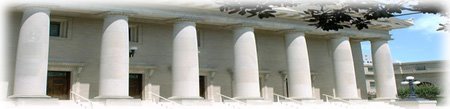
The pillars in Wisdom’s house indicate strength and support. It means a life built with sound building practices. Interestingly, Wisdom (chokmah) in Hebrew is not singular put plural (chokmoth) in this verse. This is reminiscent of the most common designation for God in the Old Testament, which is the plural word for God, Elohim, and not the singular word, El, or Eloah. In Genesis 1, God (Elohim) created the Heavens and the Earth. In Hebrew, it is not “they created” but “he created.” The singular verbs indicate ONE God, but stated by a plural designation for God. This grammatical construction is not uncommon in the Ancient Near East when it comes to an exalted or majestic individual. An exalted or majestic individual would use plural words for himself. No one is more majestic and exalted than God, therefore God, (Elohim). In Proverbs 9, wisdom, stated as a plural, is also depicted as majestic. This shows her connection and close association with God. In fact, in Proverbs 8, she declares that she is the architect of the created order. Whether it is the physical, ethical, moral, or social order by which all of life was designed, it was designed by the wisdom of God.
This majestic and divine wisdom may seem foolish to those who try to attain wisdom apart from God. However, the Bible clearly says that wisdom apart from God is foolishness. But wisdom apart from God is what is foolishness.
“For although they knew God, they did not honor him as God or give thanks to him, but they became futile in their thinking, and their foolish hearts were darkened. Claiming to be wise, they became fools, and exchanged the glory of the immortal God for images resembling mortal man and birds and animals and creeping things” (Rom 1:21-23).
Those who throw of the shackles of religion may think they are more wise, enlightened, and intelligent. Instead of looking to the creator, they begin to look to the creation. It becomes all about gaining wisdom from the sciences instead of biblical theology and its philosophy. This may seem more enlightened and intelligent than religion. However, the Bible says they become fools when they try to become enlightened without God.
God’s wisdom will seem like foolishness to those outside of Christ. This should never intimidate nor embarrass us. It should not cause us to be drawn to the wisdom of the world. As a reminder of the contrast between the wisdom of the world and the wisdom of God, 1 Corinthians says,
“For the word of the cross is folly to those who are perishing, but to us who are being saved it is the power of God. For it is written,
“I will destroy the wisdom of the wise, and the discernment of the discerning I will thwart.”
Where is the one who is wise? Where is the scribe? Where is the debater of this age? Has not God made foolish the wisdom of the world? For since, in the wisdom of God, the world did not know God through wisdom, it pleased God through the folly of what we preach to save those who believe. For Jews demand signs and Greeks seek wisdom, but we preach Christ crucified, a stumbling block to Jews and folly to Gentiles, but to those who are called, both Jews and Greeks, Christ the power of God and the wisdom of God. For the foolishness of God is wiser than men, and the weakness of God is stronger than men” (1 Cor 1:18-25).
The “wisdom of the wise” in this passage is the same sort of wisdom Jesus spoke of when he said that God hid these things from the “wise and understanding” but revealed them to little children. The wisdom that God will destroy is godless wisdom. This has already demonstrated itself in recent history. Every experiment and attempt to deal with the human condition apart from God has not only failed fantastically, but has backfired and created worse conditions.
One example of this is Marxism with its different forms throughout the 20th century. Simply trying to eliminate religion does not make sin go away, but has a tendency to amplify it by removing the only way to deal with it, which is through the cross. Simply trying to change the system without changing the root of the problem leads to greater and greater tyranny and wickedness. God, the creator, has identified the root of the problem, which is sin. This is why salvation cannot come through simply changing the system, but has to come through a change in the human heart through the cross. Only Jesus can deal with our sin. Truly, the foolishness of God is wiser than the wisdom of men.
The questions in this passage, “Where is the wise man, the scribe, the debater of this age?” could be expanded in our time to, “Where is the philosopher, professor, politician, news anchor, celebrity?” Just as ancient people looked to the sage, scribe, and debater as repositories of wisdom, people today look to those such as politicians, professors, celebrities, etc. as repositories of wisdom. However, wisdom comes from the pursuit of God’s wisdom in reverence to him.
The rest of 1 Corinthians lays out what it should look like to deal with various challenges according to the wisdom of God and not according to the wisdom of the world. The wisdom of the world says to be tolerant and accepting without calling it sin. Chapter 5 says that we must be pure. The wisdom of the world says that if you can’t get satisfaction, go to court. Chapter 6 says that with our brethren, we must work it in the church, and drop it if we can’t. The wisdom of the world says to get divorced if you are not happy with your spouse. Chapter 7 says to stay married to your believing spouse. The wisdom of the world says to insist on your rights. Chapter 8 says to be willing to give up your rights for the sake of the faith of your brethren. And the list goes on. The wisdom of God is different than the wisdom of the world.
All of this is a reminder that wisdom does not automatically come with formal education, status, or even with age. I used to associate gray hair with wisdom. However, the Bible says this:
"The beginning of wisdom is this: Get wisdom,
and whatever you get, get insight.
Prize her highly, and she will exalt you;
she will honor you if you embrace her" (Prov 4:7-8).
I sometimes ask my classes, “What is the beginning of wisdom?” Most of the time, the answer is, “the fear of the Lord,” which is true according to Proverbs 9:10. However, this passage says that the beginning of wisdom is this – GET WISDOM! This is a reminder that wisdom does not usually fall in your lap. One must pursue wisdom. It must be searched out. It must be pursued. The first nine chapters tells us that Wisdom is available if we pursue her diligently. Here is an example:
” …making your ear attentive to wisdom
and inclining your heart to understanding;
yes, if you call out for insight
and raise your voice for understanding,
if you seek it like silver
and search for it as for hidden treasures,
then you will understand the fear of the LORD” (Prov 2:2-5).
The image of wisdom being hidden treasure evokes images of digging and mining for it. It takes planning, dedication, and effort. Wisdom does not simply come with age. Many people probably know aged people who are very unwise and young people who are very wise. This demonstrates that wisdom does not simply fall in one’s lap through experience. It may take a struggle to gain it. Job is an example of this. Job struggled valiantly to understand and lamented that it seemed that wisdom was buried too deep for anyone to find it.
1“Surely there is a mine for silver,
and a place for gold that they refine.
2 Iron is taken out of the earth,
and copper is smelted from the ore. …
12 “But where shall wisdom be found?
And where is the place of understanding?
13 Man does not know its worth,
and it is not found in the land of the living. …
20 “From where, then, does wisdom come?
And where is the place of understanding?
21 It is hidden from the eyes of all living
and concealed from the birds of the air.
22 Abaddon and Death say,
‘We have heard a rumor of it with our ears.’ (Job 28).
For Job, it took struggle and agony, but Job’s pursuit of God did eventually result in a new insight in wisdom from God. He finally declared,
“I had heard of you by the hearing of the ear,
but now my eye sees you” (Job 42:5).
All of this should remind us that when we “overhear” Jesus’ prayer of thanksgiving in Matthew 11:25-26, it should encourage us to be confident in God’s wisdom. It should assure us that he has truly given us everything we need for life and godliness. It should move us to pursue God’s wisdom even if it seems out of reach at the moment. It should strengthen our passion for the wisdom of God even as the wisdom of the world ridicules it.
”...I thank you, Father, Lord of heaven and earth, that you have hidden these things from the wise and understanding and revealed them to little children; yes, Father, for such was your gracious will.”