
Showing posts with label covenant. Show all posts

Thursday, February 03, 2022

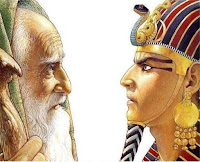
Bible Reading Reflection (Exodus 10-12): Hardened Heart and God's Name

I still remember having difficulty with the claim by skeptics that God is a manipulative and vengeful God.  After all, didn't he harden Pharoah's heart and not allow him to repent so that God could inflict all kinds of plagues on him and Egypt?  Only after reading the text carefully did I realize that this difficulty only came from an ignorance of the events that led up to this and a possible misunderstanding of justice.  No one would have an issue with God doing the same sort of thing to Hitler, Stalin, or Mao.  Pharoah fits in the same category with other despots in history who are responsible for mass murder.  

It occurs to me that the text does not give the same amount of space to Pharoah’s genocide probably because the focus of the story is the living God’s judgment on Pharoah and Egypt for their brutal oppression of God’s people and murder of their babies in the Nile.  The text gives more space to how God came down and delivered his people from them while demonstrating his righteous wrath and judgment on Egypt.  Pharoah and the Egyptians are not innocent sufferers at the hands of a vengeful God.  They rightly become the objects of God’s righteous justice for their heinous wickedness against the Hebrews.  

I have reflected on why God artificially prolonged the conflict.  Sometimes Pharaoh hardened his own heart but most of the time the text says God hardened his heart.  Several times throughout the text, God says he does so to make his name known.  In chapter 6, God said, “You will know that I am Yahweh your God when I bring you out from the burdens of the Egyptians.”  In chapter 7, God said “The Egyptians shall know that I am the Yahweh, when I stretch out my hand against Egypt and bring out the people of Israel from among them.”  He also told Pharoah, “By this you shall know that I am Yahweh: behold, with the staff that is in my hand I will strike the water that is in the Nile, and it shall turn into blood.”  This is a marvelous answer to Pharoah’s disdainful question in chapter 5, “Who is Yahweh that I should listen to him and let Israel go?”  When God removed the plague of frogs, he did it “so that you may know that there is no one like the Yahweh our God.”

However, God prolongs the conflict.  A few times Pharaoh hardened his heart, or the text simply says that his heart “was hardened” without specifying who hardened it.  However, the majority of the time, it says that God hardened Pharaoh’s heart, especially when the plagues began to intensify.  The conflict could have been over long before it ended, but God artificially prolonged the conflict.  God’s purpose was not merely to punish Egypt and redeem Egypt from bondage, but to make this a learning lesson as well.  In chapter nine, God explains why he prolonged the conflict.  He said to Pharaoh, “For this time I will send all my plagues on you yourself, and on your servants and your people, so that you may know that there is none like me in all the earth. For by now I could have put out my hand and struck you and your people with pestilence, and you would have been cut off from the earth. But for this purpose I have raised you up, to show you my power, so that my name may be proclaimed in all the earth.”  

Not only did God want his name to be known to the Egyptians and to Israel, but he wants his name to be proclaimed in all the earth.  God’s name comes with a history that reveals who he is and what kind of God he is. 

To further make his name known, God set apart the land of Goshen after the third plague.  God’s people, who were living in Goshen, did not suffer any more plagues that God afflicted Egypt with.  God communicated that he did this “that you may know that I am the Yahweh in the midst of the earth.”  Not only did God make known his power over Pharaoh and the impotent gods of Egypt, but God made his favor toward the Hebrews known as well.  He demonstrated his faithfulness to his covenant with Abraham and his ability to keep it in the midst of danger and opposition.  He made his name known as the living and faithful God who is present for his people that he make covenant with.

What a fantastic contrast between the name of Yahweh and the name of Pharaoh.  Unlike the name of the Pharaoh in Exodus 1, whose name we are not sure of, we know the name of our living God who is righteous, just, and all powerful.  God demonstrated the truth of Psalm 148:13 –“Let them praise the name of the Lord, for his name alone is exalted; his majesty is above earth and heaven,” and Proverbs 18:10 – “The name of Yahweh is a strong tower; the righteous man runs into it and is safe.”

God, whose name we know, also gives his people a name.  I am reminded of this when I consider the contrast between Pharaoh and the midwives of Exodus 1.  We are not sure of the name of the Pharoah, but we know the names of the midwives, Shiphrah and Puah.  God gave them families for doing what they could to protect the Hebrew newborn sons.  In that sense, they were given a “name.”  But more significant is the name that God gives to all of his people.  In Revelation 3:12, the Lord said that, he will write on the faithful the name of God and his own name.  Nothing is more precious than the name that is above all names.


Friday, January 26, 2018

Bible Reading Reflection (Lev 1-8)


The New Testament states that the things written before are for our learning.  The law is a school master to lead us to Christ.  Even though we are not under the law that was given specifically to Israel, and not to the church, there are still vivid lessons to learn.  I need to slow down and read more carefully.  I need to ask, "What does this teach me about God, myself, and my relationship with God?"

I am struck by the fact that when there is sin among the people it is not just the priests that act on their behalf for atonement.  The elders are instructed to bring a bull for a sin offering.  Instead of pointing a finger and saying "they" sinned, the elders represent the people in making atonement for sin in the camp.  The offering required is larger than the offering required for any individual that sins. 

Unlike the sin offering for an individual, the blood is required to be brought into the sanctuary by the priest, sprinkled before the veil seven times, and put some of the blood on the horns of the incense altar in the sanctuary.  The rest of the blood is to be poured at the base of the altar in front of the sanctuary, then burn the fat, kidneys, long lobe of the liver, and burn the rest of the carcass outside of the camp.

God doesn't give the specific rationale for all these details, but the vivid visual of all of this happening brings several things to mind.

First, there is the sheer gravity of sin.  Life blood offered before the Lord shows that sin is a matter of life and death.  Sin, which is disobedience to God, forfeits what God offers in fellowship to him, which includes life.  There are sin offerings, guilt offerings, the morning and evening offerings, and more.  I wonder how much blood there might have been over time before the veil in the sanctuary and on the horns of the incense altar, and on the altar in front of the sanctuary.  These blood stains would have been constant reminders of sin, and the danger that sin poses to life and fellowship with God.

Second, there is the condition of the heart.  God instructed that these offerings were for those who sinned "unintentionally."  This was not intended as a means by which one could buy his way into sinning willfully.  Perhaps this is why the offerings were to be from the flock or the fields, and not something they picked up from the wild that cost them nothing.  There is so much emphasis on "purity" in these passages, which are supposed to teach a lesson about remaining pure.  True purity is not mere ceremonial purity, but purity of the heart.  My desire should be to have a pure heart, as the Psalm says, "Create in me a pure heart O God."  Jesus said that the pure in heart will see God.  This reminds me that outward obedience to a ritual in itself does not magically remove sin.  Obedience must be obedience from the heart, rather than going through the motions as if the actions have some magical power in themselves.  God is not like this.  He is the living God and desires a change in heart.  Whether it is baptism, repentance, prayers of confession, I need to realize that it is much more than an outward ritual, but an inward submission of the will and heart to God.

Third, there is solidarity.  It seems that the attitude of the elders was to be to act on behalf of the people rather than to point a finger at them and separate themselves from them.  As shepherds, they took responsibility for the people as a whole.  It would be similar to elders in the church having a special prayer service where they confess to God that there is sin in the body and ask for forgiveness.  They prayer is not for them, but for "us" together as a people.  As a people, "we" have sinned.  It seems to me that there has to be an attitude of humility and solidarity in order to do this.  Pride and arrogance would cause me to think in terms of "them" rather than "us."  God redeemed a people, not just a bunch of separate individuals.  I tend to think more in terms of individual responsibility, which is definitely a biblical concept, but I do not tend this think in terms of collective responsibility and collective guilt, which is also a biblical concept.  As a leader in the body, I need to take this to heart.

Fourth, there is grace.  I usually don't hear Christians talk about this in terms of grace, but what else can it be?  God has declared that he is slow to anger and abundant in steadfast love.  It is covenant love.  Because of this, God provided a way for redemption and reconciliation.  These were not arbitrary rules, but show us some lessons we need to learn about sin.  Also, these are a shadow of the ultimate sacrifice.  This is not a sacrifice that we make, but one that the Lord makes for us.  Jesus, because of his steadfast love, offered not the blood of bulls and goats, but his own blood in order to provide eternal redemption.  The New Testament says that the blood of bulls and goats could never really take away sin.  They are a reminder of sin.  It is the blood of Jesus that once for all takes away sin.  This makes sense, because the only one that can forgive sins against our Lord is the Lord himself.  He offers his life for ours.  This shows in an even more vivid way the sheer gravity of sin along with the sheer gravity of God's undying love and loyalty to us.

Lord, may I see sin as you so.  Help me to be able to look past the initial enticement to see the devastation and death it brings.  Purify my heart.  May I learn to enjoy the pleasures of life in the way that you intended with joy, peace, and holiness.  The blood of the Lord offered for me?  For us?  How can it be? How great is your love!  How great is your loyalty!  How great is your mercy!  Thank you Lord for your patience. 

Thursday, March 03, 2016

Reflection on Deuteronomy 1


I am struck by the opening of Deuteronomy.  In verse 5, it says that "Moses undertook to expound this law, saying,…" What follows is not a bare list of dos and don'ts.  It does not read like our law books today.  Instead, Moses begins to recount the history of the people.  Included in this recounting are the laws, statutes, and instructions that God gave to Israel.  So, not only does Moses recount the laws that God gave, but he also recounts the circumstances and history surrounding those laws.

This reminds me of the instruction about the Passover in Exodus.  From chapter 11-13 of Exodus, God gives instructions concerning how to keep the Passover.  However, the text does not give a bare list of instructions about how to keep the Passover, but gives the historical context as well.  Instructions for the Passover are interwoven with the story of the Passover. 

I find it interesting that the first five books of the Old Testament are referred to as "Books of Law," yet the majority of what I find in these books are historical narratives and stories about God and his people.  I have read law books in the library, and they are nothing like the "books of law" in the Bible.

What does this say about God's law, and the kind of God that we serve? 

Those who understand Hebrew will remind us that the English word, "law" doesn't carry the full range of meaning of the corresponding Hebrew word, "Torah."  Torah can be rendered law, or instruction.   The verb form or Torah means "to instruct."  This, along with the way Torah is presented, indicates that God did not give a list of arbitrary rules.  God was interested in much more than just compliance with a set of arbitrary rules.  The stories and historical accounts give a fuller picture than a bare list of dos and don'ts would have.  Even more significant is that the historical accounts surrounding the giving of the law demonstrates the nature of the God who gave them.  God's desire is not compliance, but knowledge.  He wants his people to know him and love him.  A few chapters later in chapter 6, Moses tells the people that these words were to be "on their heart," and that they were to love Yahweh, their God, with all their heart, soul, and might.  Later in their history, God will reveal through Hosea in Hosea 6 that his delight is in loyalty, or steadfast love, rather than sacrifice, and in the knowing of God rather than burnt offerings.

No wonder God refers to his people as his bride, or the child whom he loves!  God is inherently a relational God and has always desired a relationship with his people.  1 John 4 reminds us that God is love.  Therefore, his "law" or "instruction" is more like the rules and instructions that a loving parent gives to his children rather than the laws on the law books of a nation.  Out of love, God gives his Torah to his people for their good. 

This should affect how I see and understand God's laws, statutes, commandments, and instructions.  Like the Psalms exclaims in both the 19th Psalm and the 119th Psalm, I should savor them as sweeter than honey.  I should love God's law and look forward to meditating on it in the night watches.  I should rely on God's law as that which gives wisdom, understanding, and life. 

Lord, please forgive me for those times I have relied on something other than your word.  Your word reveals your goodness, compassion, holiness, and beauty.  In keeping your word there is great reward.  Lord, may I be sustained by your word because it is the word of life.  May your word be my meditation all day and all night and may it continue to transform my heart into the beauty of your holiness.  Thank you Lord for your guidance, life, and love.  In the name of your Son, Jesus, your word that has become flesh, Amen.

Tuesday, February 16, 2016

Reflection on Numbers 1-4: God's Ledger

As I began to read the book of Numbers, it became apparent from the first chapter why it is titled the book of "Numbers."  God instructed Moses to take a census of the people of Israel.  As a result, they counted all the men old enough to fight in the army from the various tribes and were laid out by camps around the tent of meeting.  Even the Levites, who were exempted from the battlefield, were numbered and arranged by their various priestly and levitical families and duties.  When all was said and done, everyone was numbered and accounted for.

The only reason the text gives as to the purpose of this accounting was to survey the number of people eligible to go out to battle.  It gives a number of the size of the fighting force in Israel.  But for whose benefit was this?  It doesn't seem that God would need to know the number of the righting men.  The number of men is irrelevant to God, as he demonstrated with people such as Gideon in the book of Judges.  One man and God is always a majority, regardless of the size of the opposing army.

Maybe this was to be a revelation to God's people and to the nations of how God had blessed his people and multiplied them.  God wanted his people to be fruitful, multiply, and fill the earth, according to Genesis 1-11.  In Exodus 19, God said that Israel would be a nation of priests.  As a priestly nation, they would have special access to God and be able to demonstrate God's character and goodness to the rest of the world.  In a far clearer way than the heavens that declare the glory of God, his priestly nation would declare his glory through their observance of God's Torah that God had given to them for their good.

Maybe it is to show that God's promise was not yet fully fulfilled.  God promised a childless Abraham a son and many descendants who would eventually have a land of their own.  In fact, God had promised Abraham in Genesis 32 that his descendants would be too great to be numbered.  God's people had been granted land in Numbers, but they were too few to be numberless.  There was still yet more to be fulfilled in God's promise.  God's blessing would overflow much more than this.

In Revelation 7, we see a highly symbolic picture of God's people on the earth from each tribe accounted for in a similar way to what we see in Numbers.  However, each tribe has a symbolic apocalyptic number of 12,000.  12, the symbolic number of God's people times 1,000, which is the number of completeness multiplied.  All of God's people in their completeness were accounted for.  This reminds me of the numbering of the tribes in the book of Numbers.  This was an accounting of the military force of God's people.  This is a reminder that God's people are in a state of spiritual conflict while on this earth.  After all, Jesus said that we are not of the world, and the world loves its own, but hated Christ and his followers.  But the text in Revelation also says that they were "sealed."  So not only was every single person accounted for in God's army, but God placed his seal on them to identify them as belonging to him and protect them. 

Then, the scene shifts up to Heaven, the throne room of God.  The text describes it as a "multitude which no one could count from every tribe, nation, people and tongues." This is a reminder of the promise that God made to Abraham that through his seed all the families of the earth would be blessed and that his descendants would be innumerable.  God's people, who are from every tribe, nation, and language, are safe in the hands of God.

This reminds me that God is faithful to his promises.  At times it may seem as though we are alone and God does not see us.  Sometimes we may forget about God's promises, but God never forgets.  God sees our struggle and hardships and nothing is ever beyond his notice.  Jesus makes this point when he talks about how God numbers even the hair on our head.  In Matthew 10:29-31, he said, "Are not two sparrows sold for a cent? And yet not one of them will fall to the ground apart from your Father.  But the very hairs of your head are all numbered.  So do not fear; you are more valuable than many sparrows."

Jesus, the good shepherd, has accounted for every single sheep.  All of us are on his heart, and none of us are beneath his notice.  We are much more than a number to him.  In John 10, I am reminded that Jesus said that he knows his sheep by name.  In his book of life, we are more than a number.  He has our names, which he knows intimately, written in his book of life.   In fact, it is even more intimate than this.  In Isaiah 49:15-16, God says, "Can a woman forget her nursing child And have no compassion on the son of her womb? Even these may forget, but I will not forget you.  Behold, I have inscribed you on the palms of My hands; Your walls are continually before Me."  God has us tattooed or etched on his hands.  We are much more than a number and much more than a name in a book to our God.  We are near to his heart like a baby is to his mother!

Lord, how loving, kind, and compassionate you are!  You are our Father, and you are our Mother.  You protect us and provide for us.  You love us and nurture us.  Thank you for reminding us of these things in your word so that we can grow in hope, and encouragement.  Help us to see ourselves and one another the way that you see us.  Help us to love as you love.  Help us to look to Jesus as our example of true love in action.  Thank you in his name, Amen!

Thursday, February 11, 2016

Reflection On Exodus 20: God's Name

Often times, when I am thinking of God's law, I think of the tablets of stone on which were written the Ten Commandments. As a child, I can remember the drills we did on the JOY Bus in reciting the Ten Commandments. They began with, "You shall have no other gods." 
However, as I am reading text once again in Exodus 20, I am reminded that God did not begin with "You shall have no other gods." Instead, God began with "I am the LORD, your God, who brought you out of the land of Egypt, out of the house of slavery." As I am reading, I notice that LORD is spelled in all caps, which is the traditional way translators render God's personal name, "Yahweh." For a long time, I hadn't really noticed this. God says, with "I am YAHWEH, your God, who brought you out of the land of Egypt, out of the house of slavery." 
In a very significant way, these words affect how I read and understand God's law. God doesn't begin by throwing out a bunch of arbitrary rules and laws. Instead, God begins with his personal name, Yahweh. 
In Exodus 6, God indicates that this is something new. In past times, he appeared as "God Almighty," but not by his personal name, "Yahweh." This makes me think of times when I offer my personal name to people. I don't go around offering my name out to just anyone. When I offer my name, it is usually because I am initiating some sort of relationship. This makes me somewhat vulnerable to other persons needs and wishes. It opens up a greater possibility of being hurt by someone. This is why I don't just offer my name to everyone. 
Yet, God has given his personal name. He has initiated a relationship with his people. This is not a distant God merely giving arbitrary laws, but a God who is coming down to make a personal covenant with his redeemed people, a people he refers to as his special treasure (Ex 19:5-6). This is a God who has come down to be in their midst in his sanctuary tabernacle he will have them build.
This reminds me of when we took our wedding vows. It was an extremely personal and intimate moment. "I, John, take you, Stacey to be my wedded wife. . . " We were covenanted to each other to love, cherish, and honor each other. This is essentially what God does at Sinai when he begins with his personal name rather than with the first of his covenant stipulations.
This reminds me that God's word, like our wedding vows, are extremely personal and precious. It is next to the heart of God. God's word expresses how we are faithful in our covenant with God. We are now called by his name because we are his bride, and his children. No wonder the Psalmist had such a high regard and love for God's word in the 119th Psalm!

Friday, February 05, 2016

How Amazing Is our God!

As Larry West was leading us in the communion meditation during a campaign a few years ago, I was reminded of what kind of God we have.  Larry explained the ancient concept of a covenant by going step by step through a typical Hittite suzerain-vassal treaty.  We see different parts of a typical "covenant" in some of the covenants that God makes with us in scripture.  I remember studying this sort of thing in graduate school in books by Jon D. Levenson and other scholars.

But Sunday, it really hit me what kind of God we have.  These covenantal forms do not appear to have been invented by God.  There were already in use by humans in their dealings with each other when God descended and entered into a "covenant" with humans.  In today's time, it might be like God coming down, sitting across a table from us, and signing his name on the dotted line next to the "X" on a contract with us!  As I understand it though, the ancient "covenant" was something much more intense than signing on a dotted line today.  God is above all of this.  This is something that human beings have invented.  And yet, God comes down, and enters into an agreement with people using their forms and ways of making agreements! 

Theologians have recognized that God "condescends" to us and meets us where we are.  How amazing is it that God, using our man-made forms of treaties, would relate to us with them to demonstrate his faithfulness to us!  He was not obligated to do so, but he chose to do so for our sakes.  It is like the book of Hebrews says in chapter 6, he gave an oath to us so that we can have strong assurance.  This is the God that "inclines" his ear to us when we pray.  This is the God that delights in us as a groom delights in his bride.  This is the God that went so far as to meet us in the flesh . . . literally.  How amazing is that?

God loves passionately, with his whole self.  God "IS" love.  If God loves passionately, doesn't it make sense that his anger would also be passionate when that love is spurned?  If one is indifferent, there would be no anger.  If there is no anger, cant there really be love.  God is a jealous God, which is a pure jealousy in the same way a man wants his spouse for himself and not for other men.  The source of God's intense anger is from his passionate love.  At the end of the day, love is what wins.  The story does not end with God destroying mankind, but with him offering adulterous mankind a way back through the sacrifice of the cross.

When one gives his personal name as God did, "I AM", or "Yahweh," one initiates a relationship with someone else.  This is what God did when he gave his name.  When you initiate a relationship, you make yourself vulnerable to someone else.  You make yourself susceptible to their needs.  You make yourself susceptible to being disappointed or even hurt by them.  Yet, this is what God does.  He allowed himself to be "hurt" by us because of his intense, loyal, and faithful love for us.  Even though he was "grieved" that he made man on the earth, he had a plan to redeem us through self sacrifice.  God put it all out there for us.  Angry?  Wrath?  I would expect no less from a God who went to these lengths to demonstrate his love and faithfulness to win us back to himself.

Truly, God "Is" love.  Love is at the center of his nature.  His faithfulness and anger are both expressions of his love.  How amazing is the God we serve!
